Richard Seltzer's earliest memory is of falling. He was about two years old when he gripped the rail of his crib in the middle of the night, pulled himself over and dropped to the floor. He does not remember any pain, only the joy and pride of having done it. Decades later he found a school essay his son Tim had written at twelve, which described the same kind of fall: “hard, real hard; it hurt.” Father and son had lived the same event, but it meant something different to each of them.
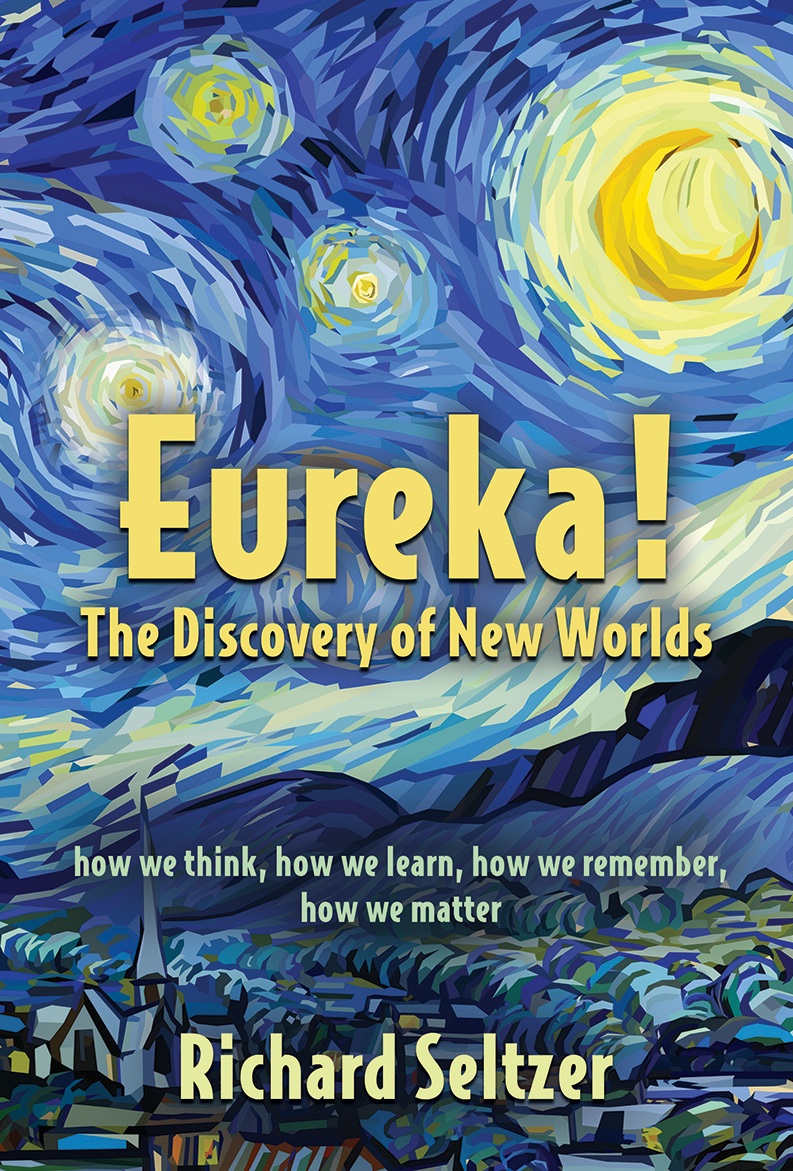
That small discovery is where Eureka! The Discovery of New Worlds: how we think, how we learn, how we remember, how we matter begins. At eighty, Seltzer sets out to explore a lifetime of thinking about thinking. “I'm not a physicist, psychologist, or philosopher,” he writes in the preface. “I'm just a guy who would like to take a stroll around the block, the mental block. Please join me.”
The stroll is a generous one. Over 250 pages that combine memoir, philosophy and psychology, Seltzer revisits childhood games and imaginary worlds, chess and mathematics, stories and maps. He traces memories of love and loss, dreams and mistakes, and what he calls the strange workings of his own mind. As he goes, the questions multiply: How do we learn how to learn? What happens when we make mistakes? Where does meaning come from? What separates mind from matter? And what, if anything, ends when we die?
The answers often arrive through very small things. His mother's bedtime tellings of Gulliver, Goldilocks and Rumpelstiltskin taught him that other worlds exist, that the same story looks different from the bear's side, and that names hold power. A weekly dime taught him to weigh objects against experiences. Then came a leap he did not recognize as a eureka moment until much later. Plastic cowboys could stand for anyone, so anything could stand in for the plastic cowboys. He collected more than a thousand bottlecaps and staged whole wars on the living-room floor, with beer caps as Indians, soda caps as cavalry, and later the same caps as Trojans and Greeks.
That habit of turning one thing into another runs through the book and through his career. Seltzer has written two dozen books and has worked as an editor, novelist, Russian translator, Internet evangelist and ebook entrepreneur. He has published novels, memoirs and children's fantasies, along with pioneering books on doing business on the Internet and on partnering with AI. Of the boy who gave up his chemistry set because it only let him follow directions, he writes that his curiosity never disappeared. It “had found a different laboratory,” where he mixed stories, history, chess, language, psychology, computers and poetry to see what happened when unlikely ideas collided.
He even makes peace with an old childhood nickname. Kids called him “Alky,” as in Alka-Seltzer, and he hated it. Now, he says, he would wear it proudly: Alky, as in alchemist.
Eureka! is finally an invitation to rediscover something we knew instinctively as children: we are not merely inhabitants of the world we were given. Through attention, imagination, inference, memory, language, play and relationship, we can keep discovering, and creating, new worlds.
Eureka! The Discovery of New Worlds is available in paperback ($17.95) and as an ebook ($2.99) from Amazon and BookLocker. Readers can try Chapter One free on Medium, learn more at seltzerbooks.com and follow Richard Seltzer on Facebook. Alongside, DORX Chronicle presents the front-page feature dedicated to the book.